
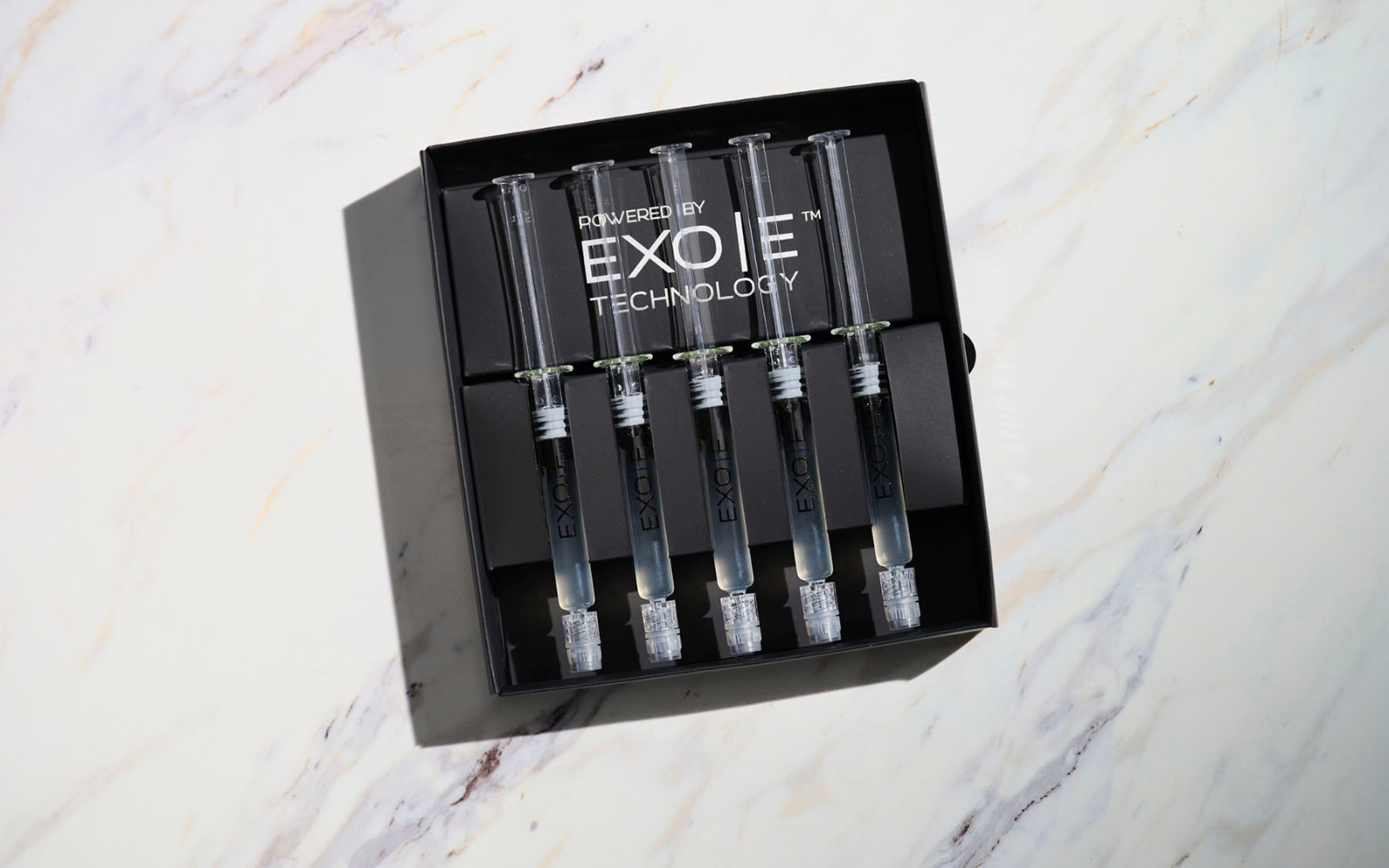
Exosomes are among the most talked-about options in regenerative aesthetics, and patient demand is climbing.
For a clinic weighing whether to adopt them, the marketing tends to skip the question that matters most: where the exosomes come from. Source is not a detail. It shapes the consistency you can expect from batch to batch, the safety profile you are accountable for, the regulatory position of the product and how you can compliantly use it in your treatment room.
It also narrows the decision more than most clinics realise. You will see three sources marketed (plant, animal and human), but only two of them are topical cosmetic options that UK clinics can lawfully choose between today.
This article sets out the practical differences so you can make an informed adoption decision, and explains why the real choice comes down to plant versus animal.
A Quick Explainer on Exosomes
Exosomes are nanoscale extracellular vesicles (microscopic packets that carry signals between cells). They act as carriers, transporting proteins, peptides, lipids and other signalling factors between cells and contributing to the body’s natural communication and repair processes.
In an aesthetic context, the interest lies in that signalling role and the potential to support skin during recovery from procedures that temporarily disrupt the barrier.
We have covered the underlying cell-signalling science in more depth in our piece on secretome signalling in skin, so this article focuses on the source decision rather than repeating the biology.
Why the Source Matters
Not all exosomes are the same, and treating them as a single category is the most common mistake we see. The biological origin of an exosome preparation determines four things a clinic genuinely cares about:
- How consistent the product is from one batch to the next.
- The safety and traceability of the raw material.
- The regulatory status of the finished product in the UK.
- The route by which it can be applied.
A product that performs well on one of these measures may fall short on another, so the source comparison is best made across all four at once rather than on headline efficacy alone.
Human and Stem-Cell-Derived Exosomes: The Hyped Option That Is Not on the Table
Human and stem-cell-derived exosomes are isolated from human biological material, such as mesenchymal stem cells or donor tissue. They attract much of the attention because human-derived exosomes feature prominently in the early research. Proponents also describe them as the gold standard for signalling payload.
For a UK clinic, though, they are not an option that can simply be added to the treatment menu. Because the starting material is biological and donor-dependent, batch-to-batch variability and traceability of the source are recognised issues, and standardisation across the sector is still developing.
The decisive factor is regulatory. Human-derived exosomes are not approved for cosmetic use, and the route by which they tend to be promoted internationally (injection) falls under medicines regulation in the UK. That places them outside what a clinic can compliantly offer today, which is why much of the exosome hype describes a product that is not actually available to you.
Animal-Derived Exosomes
Animal-derived exosomes are the other topical option a UK clinic will encounter, and they sit within the cosmetics framework in much the same way plant-derived products do. Sources vary widely, from bovine colostrum to fish and red deer material.
The main argument made for animal-derived material is biological proximity. Because it comes from animal cells, proponents argue it carries signalling factors more closely matched to human biology than a single plant source can offer, and therefore claim better compatibility with human skin.
That argument is worth taking seriously, but it comes with the trade-offs you would expect from animal-sourced biological material: questions around sourcing, traceability and batch-to-batch consistency, as well as some patients’ concerns about animal-derived ingredients. It’s also the specific claim that the plant-derived approach set out below is formulated to answer.
Plant-Derived Exosomes (PDENs)
Plant-derived exosomes, more precisely described as plant-derived extracellular nanoparticles (PDENs), are produced from plant stem cells rather than human or animal tissue. They function as biomimetic carriers, delivering factors that are compatible with the skin and intended to complement its own signalling environment.
The idea that plant compounds can act on human biology is nothing new. The caffeine in your morning coffee and the salicylic acid in your cleanser both come from plant chemistry, while many medicines also have plant-derived origins.
Plant-derived signalling factors are the same principle, one step on.
The case for plant-derived material rests first on the source. Cultivating from plant stem cells allows for a controlled, repeatable starting point, which supports greater consistency from batch to batch. It also removes both the donor-sourcing questions of human material and the animal-sourcing and traceability questions above.
The recognised limitation of plant material is the mirror image of the animal camp’s pitch. No single plant source carries the full range of human-compatible signalling factors. On its own, a single-source plant exosome has limited ability to move beyond the skin surface without an effective delivery system.
This is precisely the gap that formulation, rather than source alone, is designed to close, and it is where the specific product matters more than the broad category (see EXO|E below).
The clinical evidence base for PDENs is still emerging. Early casework has been reported in scar and post-procedure recovery contexts, so claims should be framed accordingly and expectations set realistically with patients.
What Else Is in the Bottle?
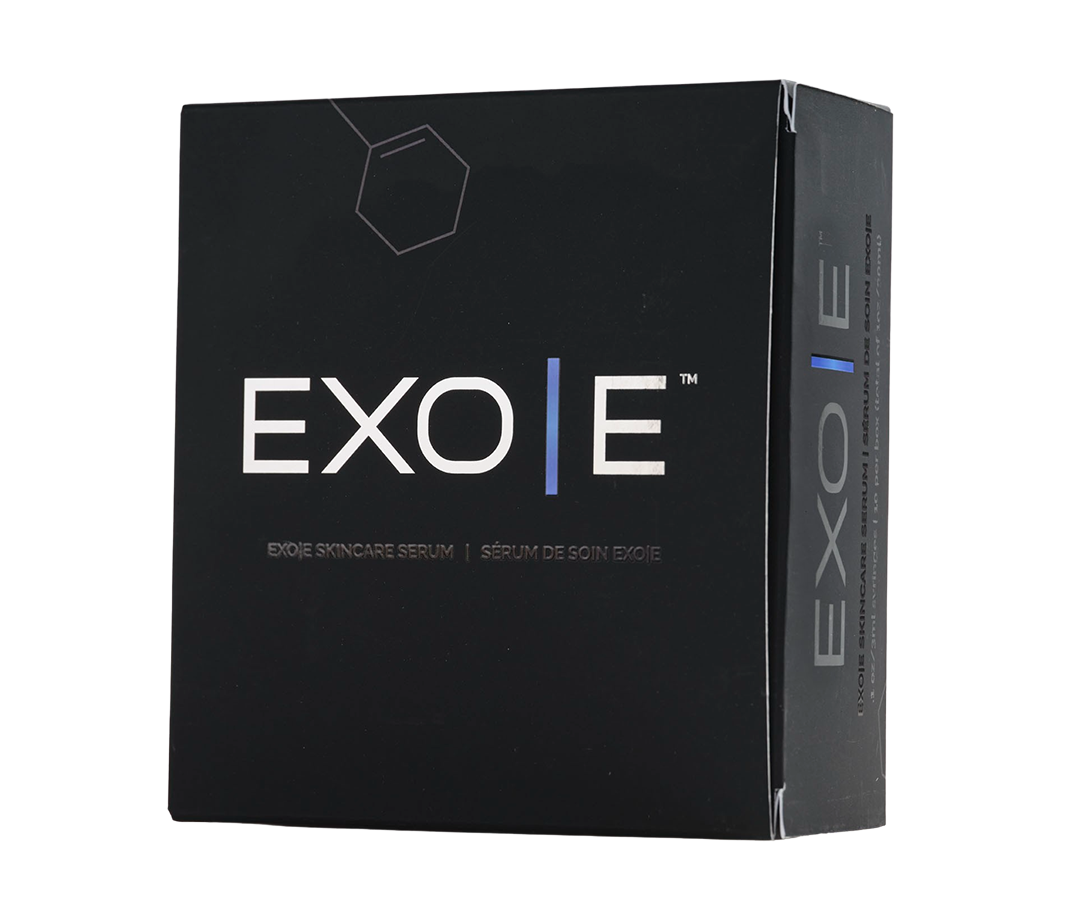
A lot of exosome products are formulated with other actives, most often added hyaluronic acid. That matters, because the point of an exosome product is signalling: prompting the skin’s own processes rather than topping it up with material from outside. EXO|E contains no added hyaluronic acid or other filler actives. What’s in the syringe is the plant stem cell secretory factors and the delivery system that carries them.
Practitioners using EXO|E report improvements in hydration and plumpness over the course of the protocol, which is what you’d expect from a product that supports the skin’s own hydration rather than supplying it.
How They Compare for a Clinic
The table below sets out the comparison across the factors that drive an adoption decision. It is a general guide, and individual products vary, so always assess the specific product and its documentation.
| Factor | Plant-Derived (PDEN) | Animal-Derived | Human / Stem-Cell-Derived |
| Source and consistency | Made from plant stem cells; controlled, repeatable starting point supports batch-to-batch consistency | Animal-sourced biological material (for example, bovine, fish or deer); sourcing and batch consistency are ongoing considerations | Donor-dependent biological material; batch variability and standardisation remain recognised challenges |
| Safety and traceability | No human or animal biological material; plant origin simplifies sourcing and traceability | Animal origin raises sourcing, traceability and patient-sensitivity considerations | Sourcing, traceability and standardisation are ongoing questions for human material |
| Biological match | No single plant source mimics the full human signalling payload; addressed through multi-extract formulation | Proximity to human biology is the main argument made for it | Closest to human signalling, being human-derived |
| UK regulatory footing | Topical, cosmetic-positioned products sit within the UK cosmetics framework; confirm classification for your setting | Topical, cosmetic-positioned products sit within the same framework; confirm classification | Not approved for cosmetic use; injectable use is not lawful in UK aesthetics |
| Application route | Topical. EXO|E uses a liposomal delivery system and is applied before the procedure; other plant-derived products vary, so check the protocol | Topical | Promoted internationally as an injectable |
| Integration into treatments | Integrates as a topical step within existing procedure protocols | Integrates as a topical step within existing procedure protocols | Limited by regulatory position in the UK |
What This Means for Your Treatment Menu
For a UK clinic, the comparison narrows to a real, two-way decision. Human-derived material, whatever its research profile, is not a compliant topical option today. That leaves plant- and animal-derived products as the practical choices for a clinic that wants to introduce an exosome-based step. The deciding question becomes which source gives you consistency and a clean sourcing story without giving up biological compatibility.
This is where our flagship plant-derived range fits. EXO|E uses patented biomimetic PDENs technology and, rather than relying on a single botanical source, blends multiple plant stem cell extracts. This formulation is designed to address the compatibility limitation of single-source plant products while retaining the sourcing and traceability advantages of plant-derived material.
Our DE|RIVE range extends the same plant-derived approach. The goal is to give clinics a consistent, well-documented product with a clear sourcing story. Adoption is a measured addition to an existing menu rather than a leap into an unsettled category.
As with any regenerative offering, we would encourage you to assess the product documentation and establish your protocols before introducing it.
How EXO|E Fits into a Treatment
EXO|E is applied topically to the skin surface rather than injected. For EXO|E specifically, the product is applied to the skin before any ablative or inflammatory treatment. Within 10 minutes, the active ingredients have penetrated the entire dermal architecture. A topical anaesthetic can then be applied, if required, before the treatment begins. Treatment can then be performed with the product already applied before the inflammatory response begins. The manufacturer’s protocol governs the sequence and should be followed.
This order is worth stating plainly, because protocols differ across products and sources. Some published case work applies exosomes after needling; others use them in combination. For EXO|E, the sequence is to apply first, then needle, and it can also be used before energy-based treatments in line with the manufacturer’s guidance, as it is not broken down by heat.
The Three-Step EXO|E System
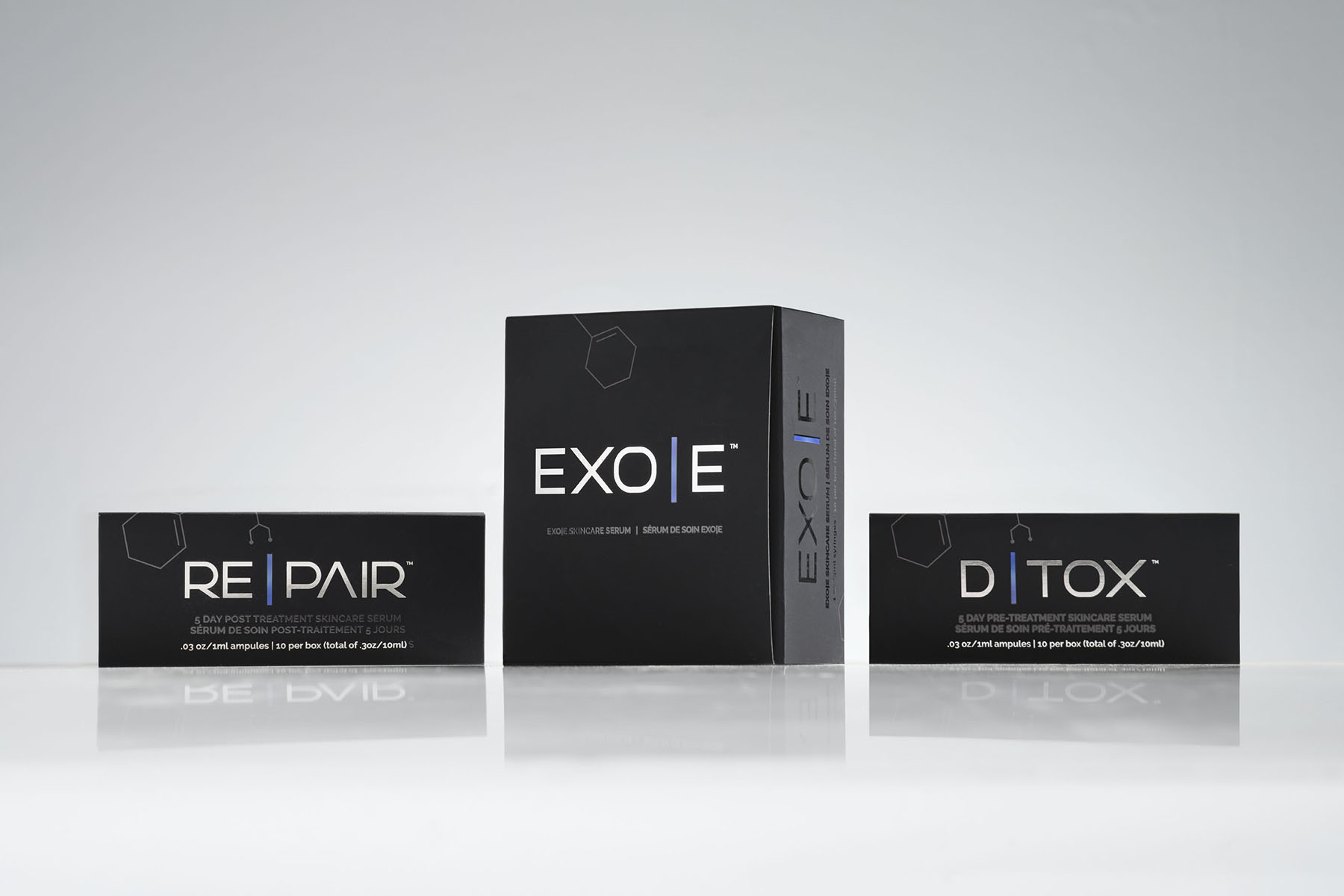
EXO|E is a three-step system rather than a single serum. D|TOX is used at home, twice a day for the seven days before treatment, to hydrate and prepare the skin. The EXO|E serum is applied in clinic on the day. RE|PAIR is used at home, twice a day for seven days afterwards, to support the skin while it settles.
In clinic, the order is to apply first, then treat. The full contents of the EXO|E syringe go onto clean skin and are given around ten minutes to absorb. Topical anaesthetic, if you use one, goes on after that. The procedure can then begin. Because EXO|E isn’t degraded by heat, the same sequence works ahead of RF microneedling and fractional laser as it does ahead of conventional needling. The manufacturer’s protocol governs the sequence and should be followed.
A Note on UK Regulation
The regulatory position is the single most important thing to get right, and it turns on the application route and product classification.
Start with the route. The MHRA considers exosomes intended for injection to be medicinal products, and with no exosome injectable holding a UK marketing authorisation, injecting exosomes is not lawful in UK aesthetic practice. Human-derived exosomes are not approved for cosmetic use. This is why the compliant options are topical.
Topical, cosmetic-positioned products are regulated differently, and this is where a common misconception needs clearing up. Cosmetics do not carry a CE or UKCA mark. That marking regime does not apply to cosmetics at all; it covers medical devices, electrical goods, machinery, toys, PPE and similar regulated products. Topical cosmetics are governed instead by the UK Cosmetic Products Regulation, which turns on a different set of obligations:
- A UK-based Responsible Person who holds legal accountability for the product.
- Notification of the product through the Submit Cosmetic Product Notification (SCPN) portal, overseen by the Office for Product Safety and Standards (OPSS).
- A Product Information File that includes a Cosmetic Product Safety Report (CPSR) prepared by a qualified safety assessor.
- Compliant labelling, including the Responsible Person’s details and an ingredient (INCI) list.
Ask your supplier for that documentation.
The cosmetics regulation also expressly excludes anything injected from the definition of a cosmetic, which is a further reason the injectable route sits outside this framework.
Guidance in this area continues to evolve, so this article reflects the position at the time of writing and is not a substitute for regulatory or legal advice. We strongly recommend that every clinic confirms the compliant use of any exosome product for its own setting, checks current MHRA and OPSS guidance, and verifies that its insurance covers the intended use before treating patients. Any suspected adverse reactions should be reported through the MHRA Yellow Card Scheme.
Speak to AMP About EXO|E
If you are considering adding a plant-derived exosome step to your menu, we are happy to talk it through. Arrange a clinical discussion with our team, or explore the full biologics range to see how EXO|E and DE|RIVE fit alongside your existing treatments. Get in touch to start the conversation.
Get in TouchFAQs
What are plant-derived exosomes?
Plant-derived exosomes, or plant-derived extracellular nanoparticles (PDENs), are nanoscale vesicles produced from plant stem cells. They act as biomimetic carriers of skin-compatible factors and are formulated for topical use in aesthetic skincare, most often applied before procedures such as microneedling.
What are the alternatives to plant-derived exosomes?
There are two other sources you will see marketed. Animal-derived exosomes are drawn from animal material such as bovine colostrum, fish or red deer, and are also used topically. Human and stem-cell-derived exosomes come from human biological material and attract much of the research interest, but they are not approved for cosmetic use in the UK. This leaves plant and animal-derived products as the practical topical options.
How do plant-derived and animal-derived exosomes differ?
Both are topical and sit within the UK cosmetics framework, so the difference is one of source and its consequences. Animal-derived material is promoted on its biological proximity to human cells, but carries the sourcing, traceability and patient-sensitivity considerations of any animal ingredient.
Plant-derived material offers a controlled, repeatable starting point and a simpler sourcing profile. The recognised gap for plant material, that no single plant mimics the full human signalling payload, is addressed by formulating with multiple plant extracts rather than one. EXO|E is also a truly topical product and does not need needling into the skin to penetrate the dermal layers. So it goes on before the procedure rather than being needled in afterwards.
Are exosomes legal to use in UK aesthetic clinics?
The position depends on the source and the application route. The MHRA treats injected exosomes as medicinal products, and there is no exosome injectable with a UK marketing authorisation, so injecting exosomes is not lawful in UK aesthetics.
Human-derived exosomes are not approved for cosmetic use. Topical, cosmetic-positioned plant- and animal-derived products are regulated under the UK Cosmetic Products Regulation, but classification depends on the specific product, so clinics should confirm compliant use for their own setting and check current MHRA and OPSS guidance.
How are exosomes applied in treatment?
In UK aesthetic practice, exosome products are applied topically to the skin surface. The sequence depends on the product and the manufacturer’s protocol. EXO|E, for example, is applied to the skin first, before any treatment, and after 10 minutes, the treatment can be performed, or an anaesthetic can be applied (if used) prior to RF microneedling or fractional laser treatment. EXO|E can also be used as a standalone facial treatment without an accompanying device procedure.